


Getting dressed for a festive occasion sounds easy until you actually stand in front of your wardrobe.
You want the outfit to feel special. A little more colour, perhaps some embroidery, your favourite earrings, something that tells everyone you knew there was an occasion. But there is a point where “dressed for the festival” quietly turns into “dressed for a wedding.”
Most of us have been there.
The problem isn't usually the outfit itself. It is what happens after you put it on. One more accessory here, another detail there, and suddenly the look has lost the relaxed quality you originally liked about it.
Festive dressing doesn't need to be loud. In fact, some of the most memorable Indian outfits are the ones where you can still see the woman wearing them.
What Makes an Outfit Feel Festive in the First Place?
There isn't one particular thing that makes an outfit festive.
It could be the colour. It could be the fabric. It could be a small embroidered detail around the neckline. It could even be the jewellery you decide to wear with a very ordinary kurta.
Think about a simple cotton kurta in your wardrobe. Wear it with sneakers and a tote, and it belongs to your everyday rotation. Wear the same kurta with earrings, juttis and a small potli for Diwali, and suddenly it has a completely different personality.
The clothes haven't changed. The context has.
That is worth remembering before you start adding things to an outfit simply because it is a festival.
The “Too Much” Usually Happens After the Outfit Is Already Complete
You put on your favourite embroidered kurta. It looks good.
Then you decide you need earrings.
The earrings look good too. So you add bangles. Then perhaps a necklace because the neckline feels a little empty. By the time you pick up an embellished bag, the original outfit is almost an afterthought.
This is where festive dressing can go wrong.
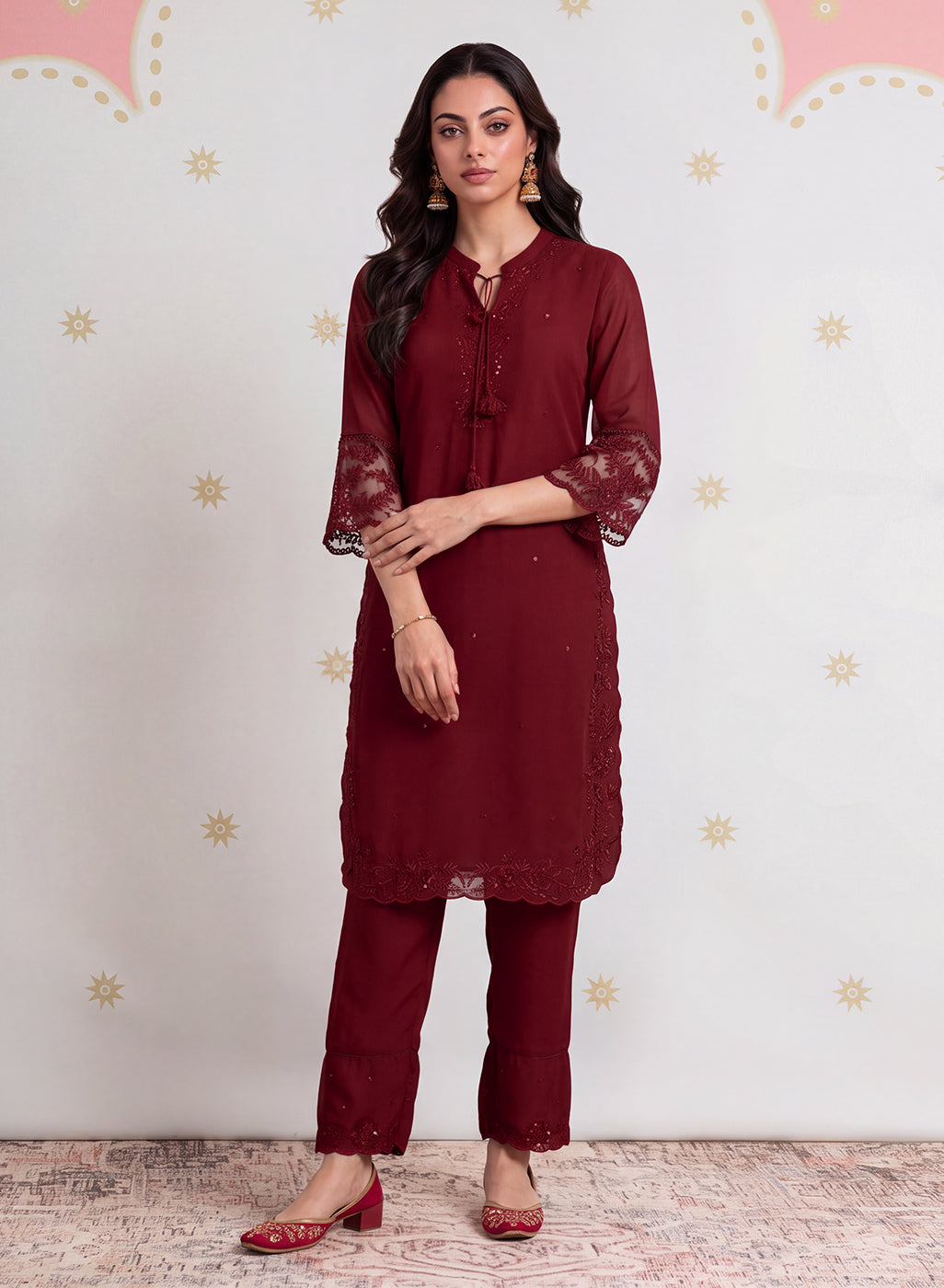
Take a look at something like Lakshita's Ziya Garnet Red Embroidered Kurta Set. The garnet shade already gives the outfit a strong festive presence, and the embroidery adds another layer of detail.
It doesn't need much help.
A pair of earrings and a comfortable pair of heels or flats can be enough to take it out of the everyday wardrobe and into occasion territory.
The point isn't that you can't wear more jewellery. You absolutely can. It is more about noticing when the outfit already feels finished.
Colour Can Carry an Entire Look
We tend to associate festive dressing with embellishment, but colour often does the job much more quietly.
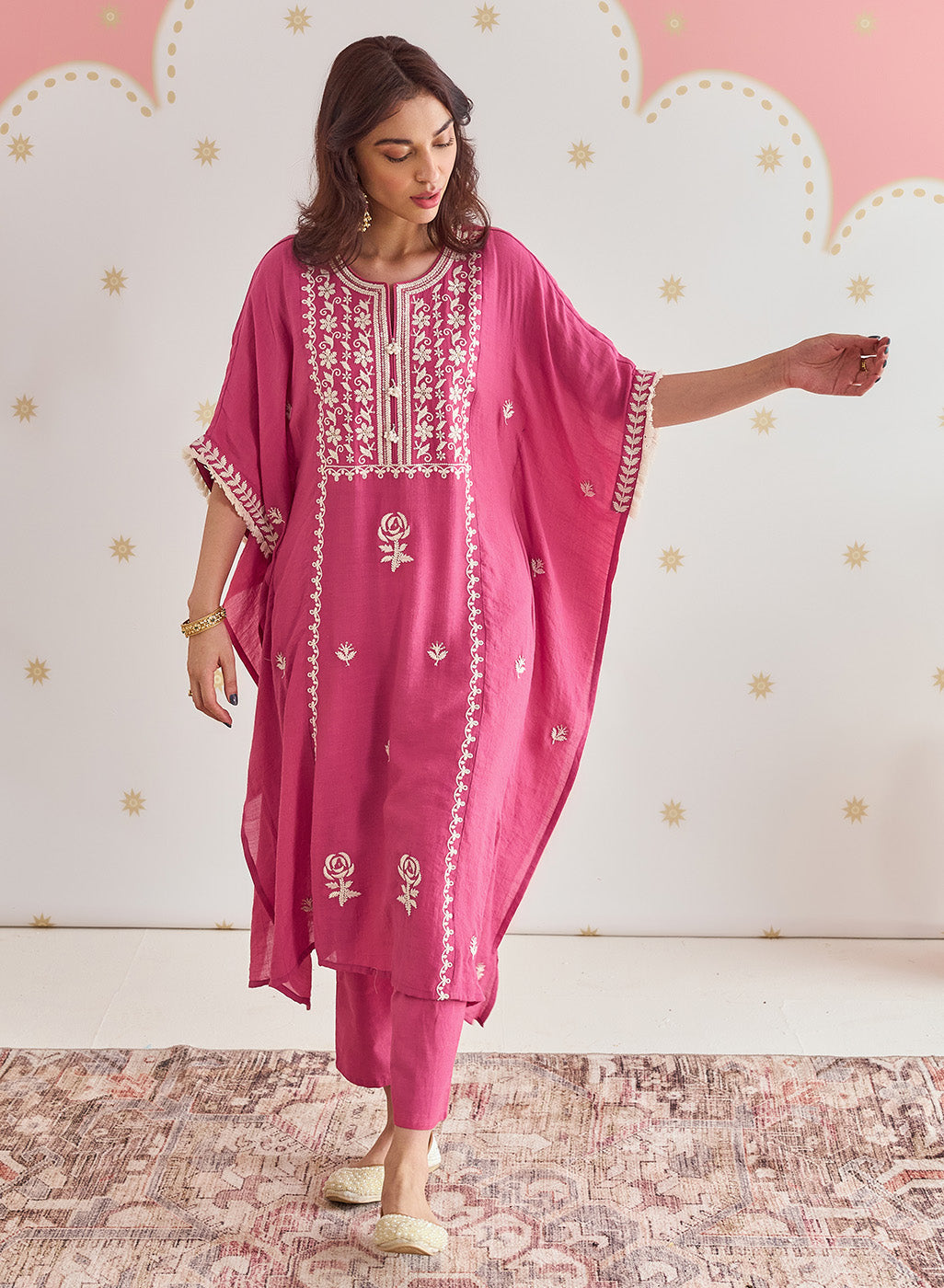
A deep red kurta. A bright pink set. Mustard with gold jewellery. A rich green that you wouldn't normally wear on a Monday morning.
These colours have an occasion-like quality even before you add anything else.
This is especially useful if heavy embroidery isn't really your style. You don't have to suddenly become someone who wears sequins and layers of jewellery during every festival. A colour you love can be enough of a change from your everyday wardrobe.
And sometimes, that looks much more natural.
There Is Also Such a Thing as “The Right Amount” of Embroidery
Embroidery gets blamed for overdressing far too often.
A delicate embroidered neckline on a cotton kurta is very different from an outfit covered in embellishment from shoulder to hem. Both can be festive. They simply belong to different kinds of occasions.
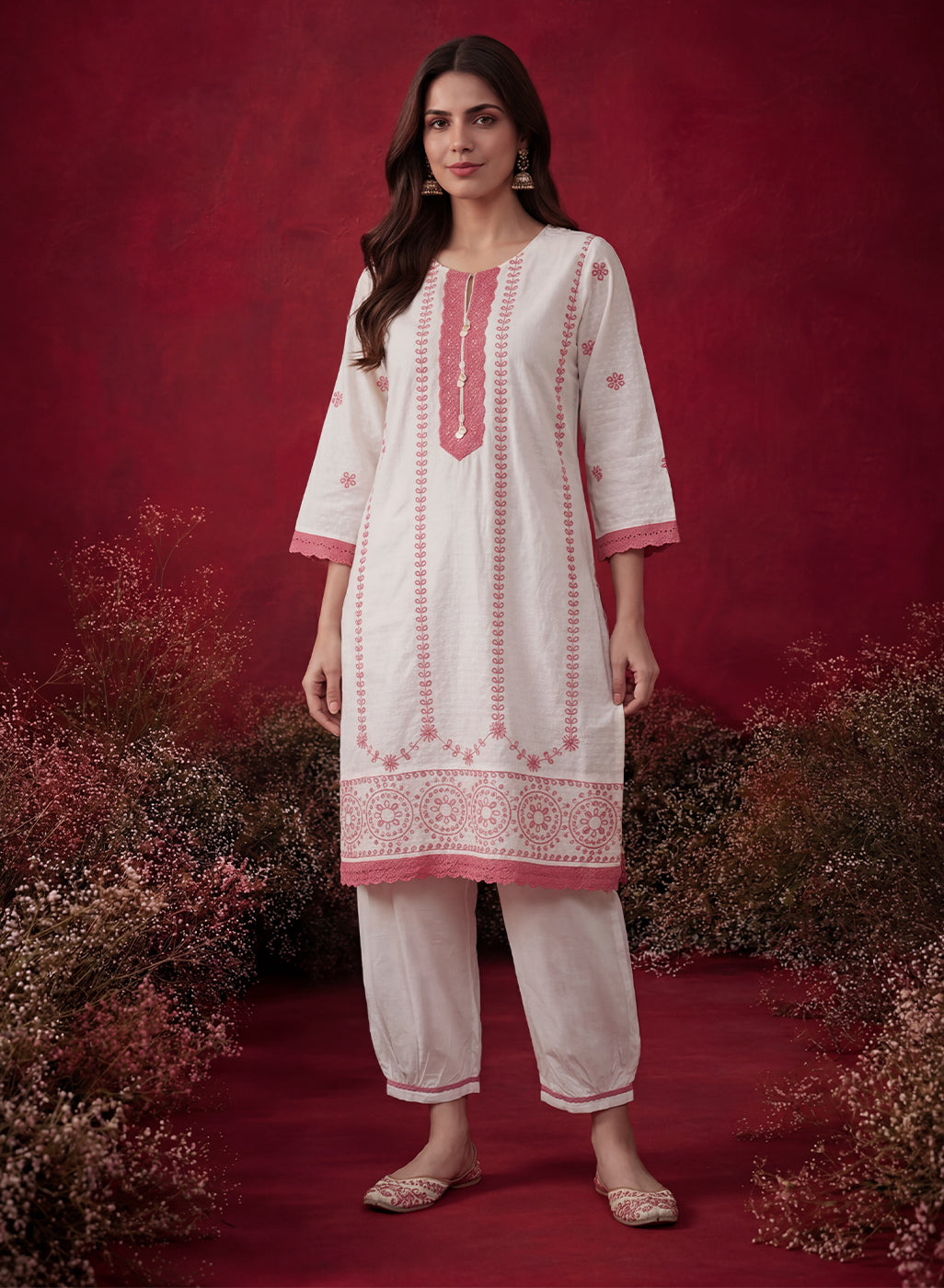
Lakshita's Kiana Pink Currant Embroidered Cotton Dobby Kurta Set is a good example of the middle ground. The pink colour and embroidery make it feel more special than everyday wear, while the cotton dobby fabric keeps it from feeling too formal.
That's the kind of outfit you can wear to a family lunch or a smaller festive gathering without wondering whether you've dressed up too much.
The same idea works with fabrics. Cotton, linen and lighter blends can make even an embroidered outfit feel relaxed. More structured or heavily embellished fabrics naturally push the look towards formal occasion wear.
Your Jewellery Doesn't Have to Match the Volume of Your Clothes
This is probably where personal style matters most.
Some women love their jhumkas and won't leave the house without them. Others prefer tiny studs. Some will happily wear bangles with everything; others find one bracelet more than enough.
There is no correct amount.
What helps is looking at the outfit before deciding on the jewellery. A detailed neckline might already give you something to look at. A plain kurta, on the other hand, gives your earrings or necklace more room.
And you don't have to match gold with every festive outfit either. Silver, pearls, colourful jewellery or even something you already wear every day can work.
Festive dressing becomes much easier when you stop treating it like a checklist.
The Occasion Still Has the Final Say
Imagine wearing a heavily embellished suit to a friend's small Diwali lunch.
Beautiful outfit. Wrong amount of outfit.
Now imagine wearing that same suit to a large evening celebration.
Suddenly, it makes complete sense.
This is why the question shouldn't really be, “Is this outfit festive enough?”
Ask, “Festive enough for what?”
A family puja, office Diwali party, card night with friends and a wedding all sit under the broad umbrella of Indian celebrations. They don't, however, require the same wardrobe.
Once you start dressing for the actual setting, choosing becomes much easier.
When in Doubt, Take One Thing Away
Here's a trick that works surprisingly well.
Get completely dressed. Jewellery, shoes, bag — everything.
Then take one thing off.
Maybe it's the necklace. Maybe it's the second bracelet. Maybe the embellished bag that seemed necessary five minutes ago.
Look at yourself again.
Quite often, the outfit looks better.
Not because there is anything wrong with that extra piece, but because the rest of the look finally gets a little more attention.
It is also why simple styling photographs so well. When there are fewer competing details, the colour, print, embroidery and silhouette of the outfit are easier to notice.
Festive Should Still Feel Like You
There is no point wearing an outfit that looks perfectly festive if you spend the entire evening adjusting it.
If you never wear heels, a festival isn't necessarily the time to discover whether you can survive them for six hours. If you normally wear minimal jewellery, you don't have to suddenly wear a full set because everyone else is.
Wear the version of festive dressing that makes sense for you.
For some people, that might be an embroidered kurta and silver earrings. For someone else, it could be a bright co-ord with barely any jewellery. Both can look completely appropriate.
The difference between festive and overdressed isn't measured by the number of details on your outfit.
It comes down to whether those details belong together and whether they belong at the occasion you're attending.
So before you add that final necklace, stop for a second and look in the mirror.
If you already look like you’re ready for the celebration, you probably are.
FAQs
How do I know if my festive outfit is too dressy?
Think about the setting first. If your outfit feels significantly more formal than what the occasion calls for, you may want to simplify either the clothes or the accessories.
Can a simple kurta look festive?
Definitely. The right colour, earrings, footwear or a small amount of embroidery can change the feel of a simple kurta without making it formal.
Should festive outfits always have embroidery?
No. Prints, colours, fabrics and styling can all give an outfit a festive feel. Embroidery is just one way of doing it.
How can I tone down a heavily detailed outfit?
Let the outfit remain the main focus. Choose simpler jewellery, footwear and a bag rather than adding more embellished pieces.
